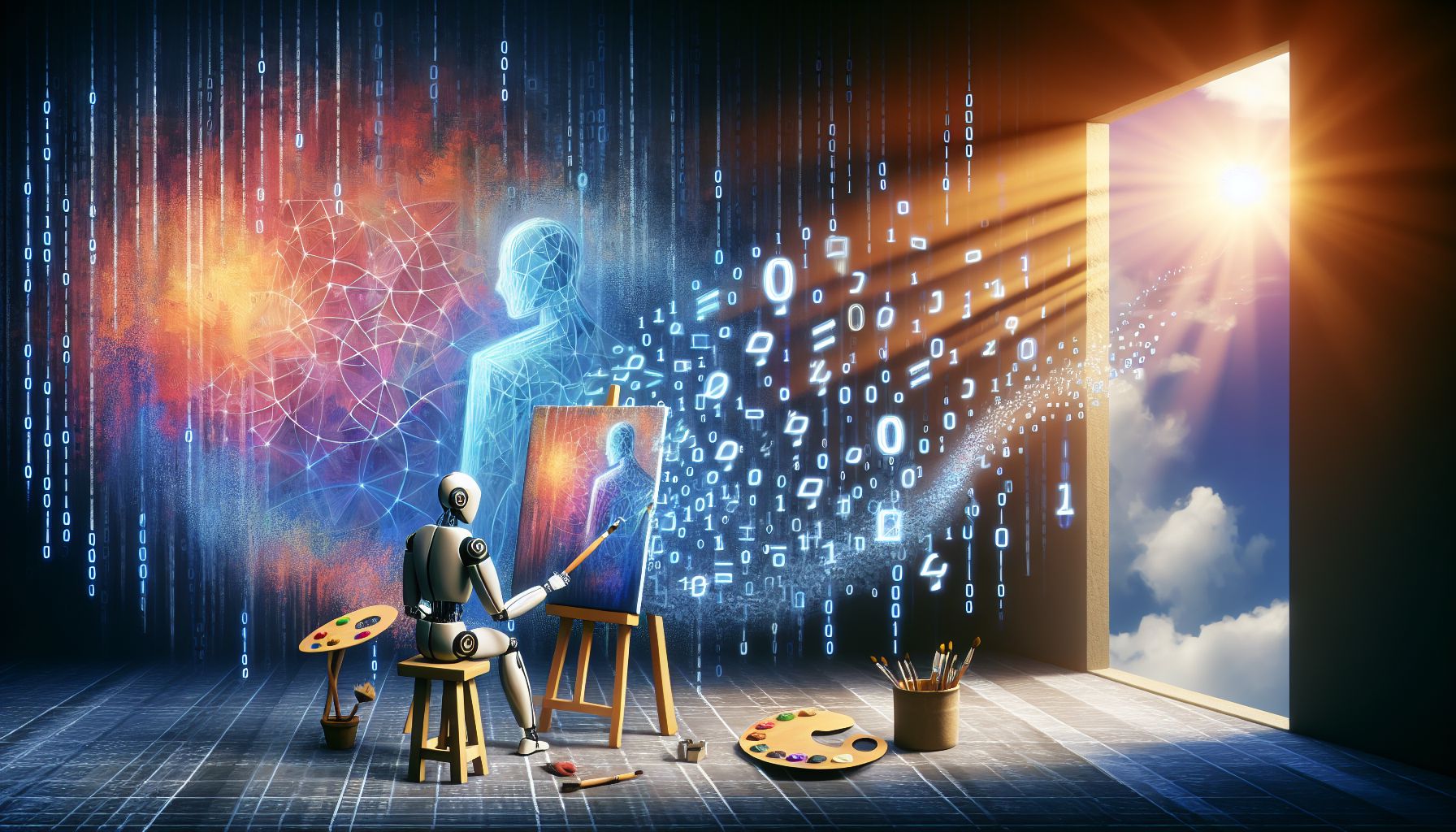
Alright, tech enthusiasts, dreamers, and potential nightmare huggers, gather ’round for today’s techno-utopian tale—all about our multifaceted and, shall I say, unpredictably creative friend: Artificial Intelligence in the Arts.
Every once in a while, amid the furor over big data, blockchain bros claiming they’re decentralized, and what I like to call “To-the-Moon Touts,” another breakthrough quietly reshapes civilization. Today’s episode draws the curtains back on AI infiltrating the hallowed halls of artistry.
The New Da Vincis in the Circuit
How about this for a start: AI isn’t just a side player in this artistic renaissance—it’s holding a canvas and some digitized brushes. It’s pooling its resources with creators worldwide to redefine art itself. Think of it as Picasso-meets-programmer, or Monet with more megabytes. Cool, right?
Now, AI in artwork sounds a bit sterile at first. You know AI from spreadsheet wizardry and the algorithmic dance of data processing. But the truth here is far jazzier. Artists pour emotion into their creations. Can machines do the same? Many skeptics swore it was impossible until they came face-to-face with AI-driven masterpieces that stirred both heart and intellect. Turns out, the paths art chooses paint far more colors than we earlier imagined.
Let me walk you through this corridor carpeted in chrome and coated in crosshatch.
TensorFlow and Tempera: The Tech Behind the Transformation
For those not familiar with computer wizardry, let me break down the pathways: machines dream in neural networks, processing data faster than you can blink.
The building blocks work like this: Machine learning frameworks like TensorFlow and PyTorch simulate brush strokes and envision color palettes. They churn out models with more computational power than our coffee-fueled cohort of human coders. Remember Night at the Museum? Imagine art literally brought to life, but with the computational equivalent of a swirling digital disco.
This tech wizardry works not just because we’re programming painters, but because of exponential progress in deep learning theory applied to art. The works emerge not simply due to technological prowess. More importantly, there are people driven by pixel passion who made this happen.
From Skeptical to Spectacular
You can’t talk about new technology without addressing the skepticism. Let’s be honest—when AI first started creating art, plenty of people rolled their eyes. The Mona Lisa took years of human skill and emotion. Could an algorithm really compete?
Consider this: algorithms can now analyze thousands of masterpieces, learning brush techniques and color theory faster than any art student. They’re not just copying—they’re creating original works that make people stop and stare. The results offer new possibilities while cultural gatekeepers scramble to figure out what this means for traditional art.
Putting Human Touch in Artificial Expression
Here’s where it gets interesting. AI doesn’t just spit out random pretty pictures. The best AI art happens when humans guide the process. Artists feed the algorithm their vision, adjust parameters, and curate the results. It’s collaboration, not replacement.
Think of it like having a really talented assistant who never gets tired and can try a million variations of your idea. The human still makes the creative decisions, but now they have a tool that can execute at superhuman speed and precision.
Collaborating, Not Competing
Still think algorithms spell doom for traditional artists? The partnerships I’m seeing tell a different story. Smart artists are using AI as another brush in their toolkit.
I’ve talked to painters who use AI to explore color combinations they’d never think of. Digital artists who let algorithms handle tedious background work while they focus on the emotional core of their pieces. Musicians who collaborate with AI to generate melodies they then arrange and refine. It’s not about replacement—it’s about augmentation.
Looking Ahead: Promise and Peril
So where does this leave us? I’m honestly torn. On one hand, watching AI create something beautiful feels like witnessing magic. The democratization of art creation means more people can express themselves creatively, even without years of traditional training.
On the other hand, there are real concerns. What happens to art market economics when anyone can generate professional-quality work? How do we value human creativity when machines can mimic it so well? And let’s not even get started on the copyright implications.
The ethical questions multiply faster than the technology advances. Who owns an AI-generated piece? The programmer? The person who prompted it? The artists whose work trained the algorithm? These aren’t just academic debates—they’re shaping real lawsuits and policy decisions.
But here’s what I keep coming back to: every major artistic revolution has triggered the same fears. Photography was going to kill painting. Digital art was going to destroy “real” art. Yet painters kept painting, and new forms of beauty emerged.
Maybe AI art isn’t the end of human creativity. Maybe it’s just the next chapter.
And there you have it, budding utopians! A take on AI’s artistic bloom as it picks up the brushes. Who would have thought we’d get here so fast?
What do you think? Are we witnessing the birth of a new art form, or the slow death of human creativity? Hit me up in the comments—I’d love to hear your take on this wild ride we’re all on together.