When Your Screenshots Become Someone Else’s Property
I’ve been staring at my PlayStation 5’s photo gallery for the past hour, scrolling through hundreds of Final Fantasy VII Rebirth screenshots I took during my playthrough last year. Cloud standing against that sunset in the Grasslands. Tifa’s perfect action pose mid-combo. That emotional moment with Aerith in the church that made me ugly cry for twenty minutes. Each one felt like a little piece of art I’d created, a memory I’d captured using the game’s photo mode tools.
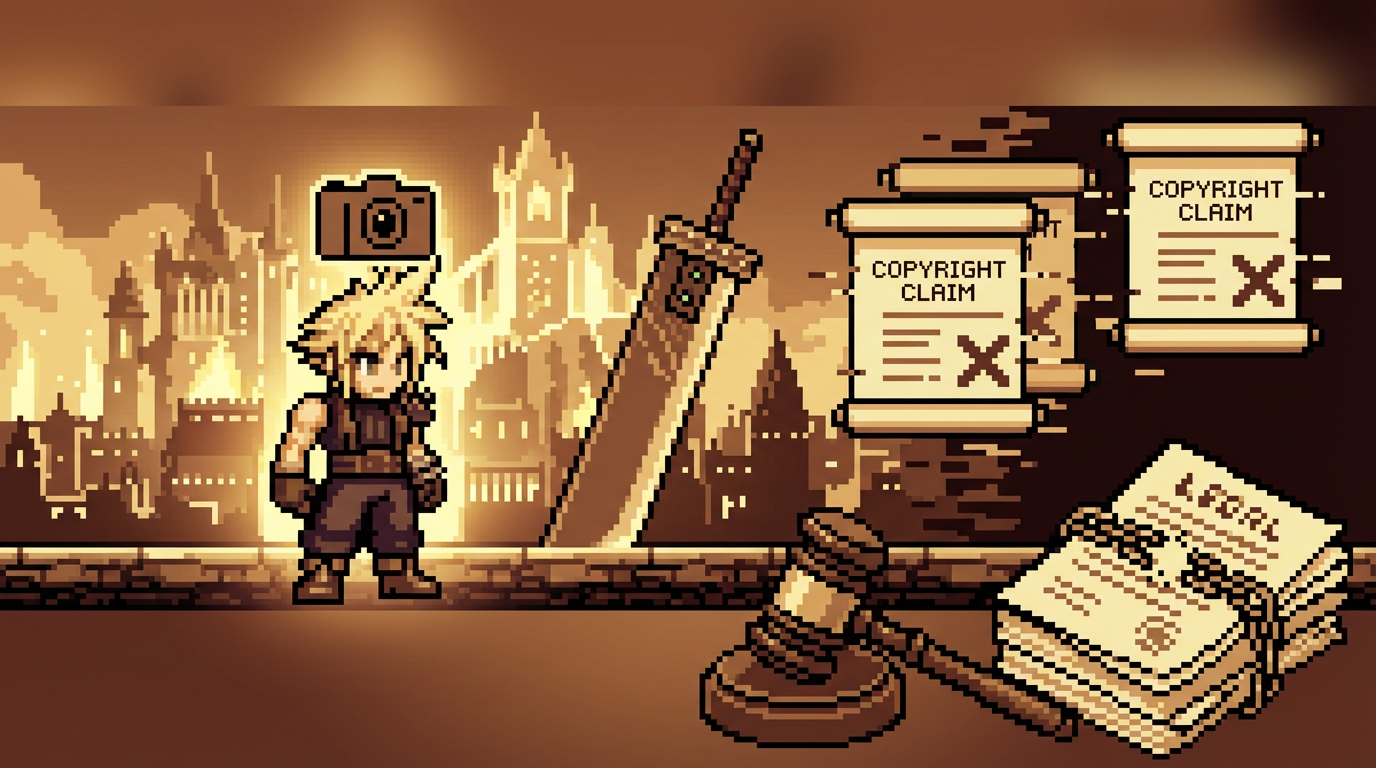
Now I’m wondering if any of them actually belong to me. In January, Square Enix sent DMCA takedown notices for over 2.3 million user-generated screenshots from Final Fantasy VII Rebirth’s photo mode, claiming copyright infringement on what many of us considered our own creative work. The gaming community is still reeling. I’m still trying to process how we got here.
This isn’t just about legal technicalities or corporate overreach. This is about the fundamental relationship between players and the games we love. About the creative spaces developers carve out for us. About what happens when the business side of gaming collides with the community spirit that makes this hobby so special. We need to talk about how this mess started, why it matters to every single person reading this, and what it means for the future of how we share our gaming experiences.
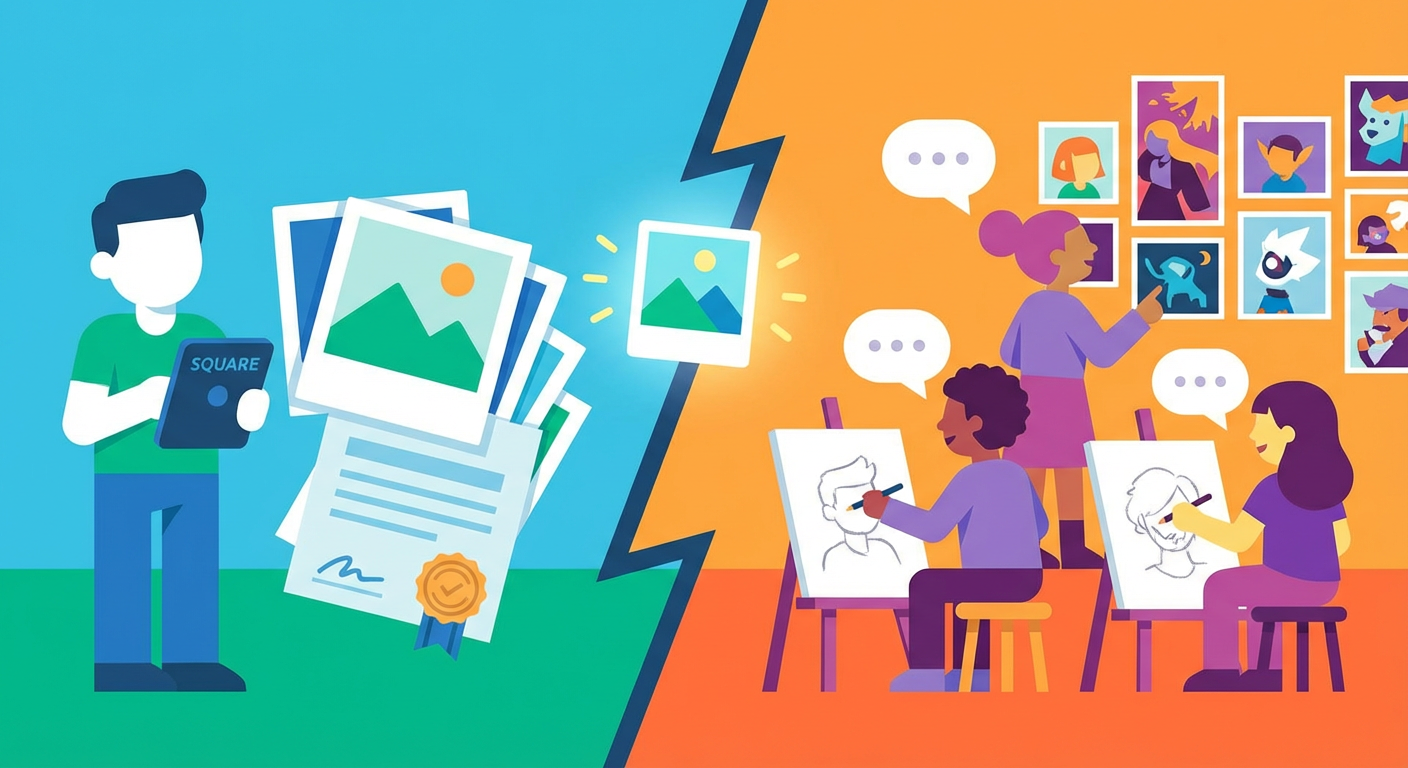
The Perfect Storm Nobody Saw Coming
Final Fantasy VII Rebirth’s photo mode was genuinely revolutionary. Square Enix gave us tools that felt almost professional-grade. Lighting controls that would make a film cinematographer jealous. Pose options that let us tell stories within stories. The community responded exactly as you’d expect. Social media exploded with beautiful shots. Fan artists used screenshots as reference material. Content creators built entire videos around the most creative captures.
Everything changed when Square announced their “Rebirth Moments” print collection in late 2025. These weren’t just any prints. They were high-quality reproductions of some of the most popular community screenshots, rebranded and sold through Square’s official store. The kicker? Many of these images were lifted directly from social media posts without permission or attribution to the original photographers.
The backlash was swift and justified. Players who had spent hours perfecting their shots found their work being monetized by the very company that had encouraged them to create in the first place. But instead of addressing the ethical concerns, Square doubled down with a legal strategy that shocked everyone. They claimed that all screenshots taken within their game, regardless of the creative input from players, were derivative works of their copyrighted material.
Legal experts are now estimating potential damages exceeding fifty million dollars if Square enforces all their claims. That’s not just a number on a spreadsheet. That’s real people facing real financial consequences for doing what game developers have been encouraging for over a decade.
When Sony Hit the Panic Button
The situation escalated beyond anyone’s imagination when Sony made the unprecedented decision to temporarily remove photo sharing functionality from PlayStation 5 systems while they reviewed their copyright policies. Think about that for a moment. A console manufacturer was so concerned about the legal implications that they disabled a core feature across millions of devices worldwide.
I remember the exact moment it happened. I was trying to share a particularly gorgeous shot from Ghost of Tsushima to Twitter, and instead of the usual sharing menu, I got a bland error message about “temporary service unavailability.” The PlayStation subreddit exploded. Gaming Twitter went into meltdown. Small content creators who relied on screenshot sharing for their livelihood suddenly found themselves cut off from their primary tool.
Sony’s move wasn’t just about protecting themselves legally. It was a clear signal that the industry was genuinely unsure about where the boundaries lay between user-generated content and copyright infringement. When a company that size makes such a drastic decision, it sends shockwaves through every corner of the gaming ecosystem. Indies started questioning whether they should include photo modes at all. AAA studios began reviewing their existing features. The entire landscape shifted overnight.
The Electronic Frontier Foundation Analysis on Gaming Copyright released during this period highlighted just how murky the legal waters had become, noting that existing copyright law wasn’t designed to handle the collaborative creative spaces that modern games provide.
The ESA Steps In (Finally)
After weeks of chaos, the Entertainment Software Association finally released their ESA Photo Mode Copyright Guidelines 2026 in February. Reading through these guidelines felt like watching someone try to put toothpaste back in the tube. The damage was already done, but at least someone was attempting to create a framework for moving forward.
The guidelines try to strike a balance between protecting developers’ intellectual property and acknowledging the creative contributions of players. They establish categories for different types of in-game photography, from basic gameplay captures to heavily modified artistic compositions. They also outline fair use protections for educational content, criticism, and transformative works. It’s a start, but it feels like closing the barn door after all the horses have already bolted.
What’s particularly frustrating is how these guidelines essentially codify what most of us understood intuitively. If you’re using a game’s photo mode to create something genuinely transformative or artistic, that should be protected. If a developer gives you creative tools, they shouldn’t be able to claim ownership over everything you make with them. But the fact that we needed formal guidelines at all shows how badly the industry fumbled this situation.
Where We Go From Here
The Final Fantasy VII Rebirth photo mode controversy has fundamentally changed how we think about ownership in gaming spaces. Some developers have started including explicit creative commons licensing for photo mode content in their terms of service. Others have removed photo modes entirely rather than deal with the legal complexity. A few brave studios have even started revenue-sharing programs with players whose screenshots become popular.
But here’s what really gets me about this whole mess. Gaming has always been about community. About sharing experiences and creating together. About taking something a developer made and making it your own through play. Photo modes felt like the natural evolution of that collaborative spirit. They were spaces where the line between playing and creating became beautifully blurred.
The copyright crisis has thrown a spotlight on just how fragile those creative relationships really are. When push comes to shove, when there’s money on the table, the community spirit that makes gaming special can evaporate pretty quickly. That’s not to say developers are evil or that corporations are inherently bad. But it is a reminder that the spaces we think of as ours might not be as secure as we assumed.
I’m still taking screenshots. I’m still sharing the ones that make me proud. But there’s a little voice in the back of my head now, a hesitation that wasn’t there before. And I know I’m not alone in that feeling. The question now is whether we can rebuild that trust, whether developers and players can find a way forward that protects everyone’s interests without killing the creative spark that makes photo modes so special in the first place.
What do you think? Have you changed how you approach in-game photography since this whole controversy erupted? I’d love to hear how other players are navigating these murky waters, because honestly, we’re all figuring this out together.