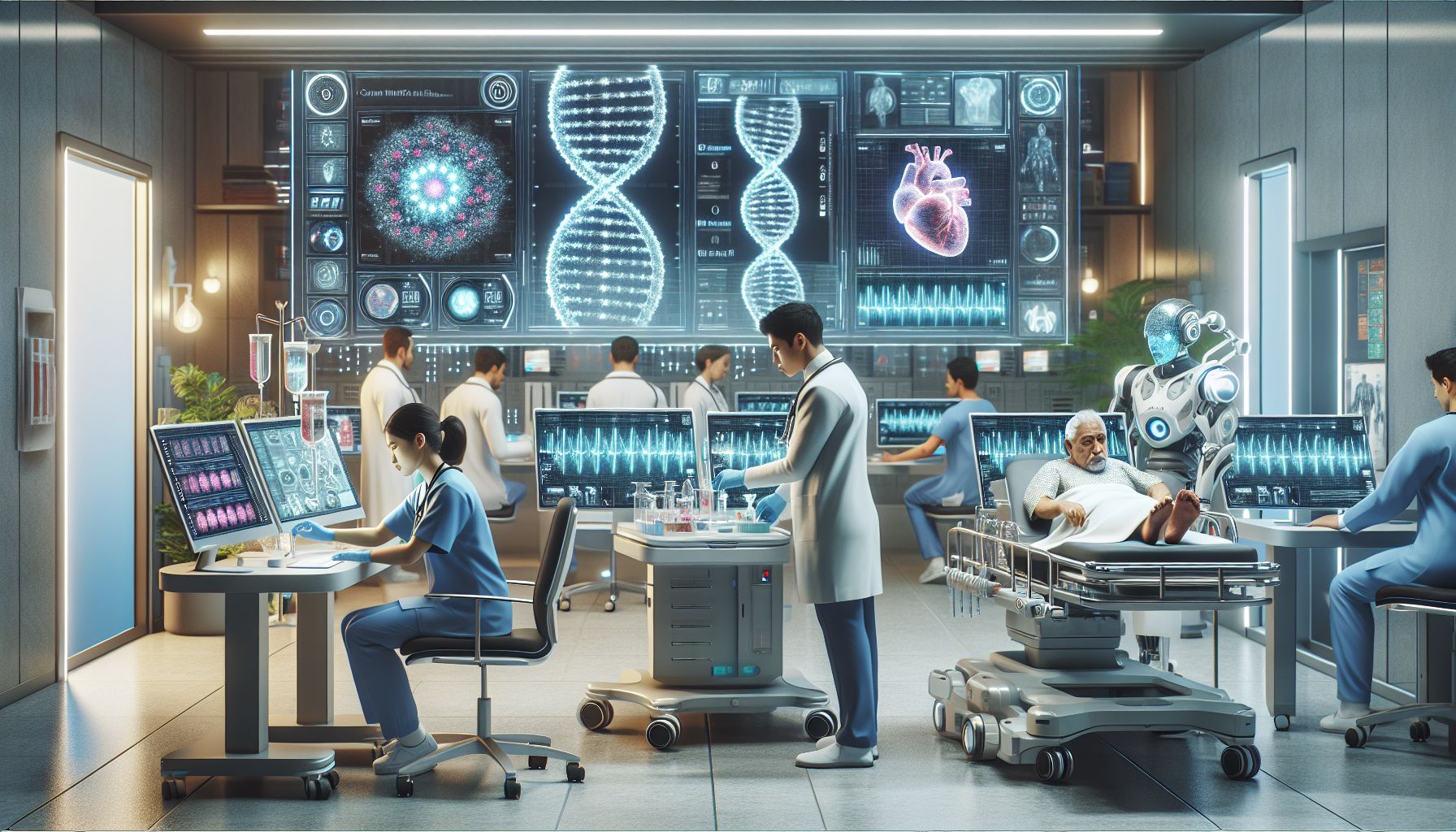
Hey tech aficionados! Have you heard about the latest mind-boggling strides in healthcare tech thanks to our silicon-powered comrades? Yes, I’m talking about Artificial Intelligence in Medicine! We’ve all seen AI dip its toes in other fields—crafting chatbots like linguists, conquering games, or even daydreaming cars into self-driving fleets—but the real marvel is watching it revolutionize healthcare right before our eyes. Let’s dive into how this symphony of code and neurons is reshaping our health industry and patient care.
The AI Revolution in Diagnosis
So, there I was, gripping my over-priced latte in one hand and scrolling my feed with the other, when a headline caught my eye: AI is diagnosing diseases with higher accuracy than top healthcare professionals. Cue spit-take, right? Turns out, algorithms can now parse through massive amounts of patient data from X-rays to MRIs and spot subtle patterns human eyes might miss. DeepMind, for instance, partnered with Moorfields Eye Hospital to develop an AI that detects eye diseases with incredible precision.
Picture this: you slide into an appointment, and instead of an intimidating gurney covered by sterile white coats, you’re greeted with integrated systems that boost a doctor’s expertise. It’s like having a capable Watson at your side that’s 90% sure your RSI is carpal tunnel based on those hundreds of thousands of images it’s analyzed. Color me impressed!
AI as a Personal Health Consultant
Consider Joe—the not-so-unreal example I made up—he’s just your standard fitness tracker-wearing, health-conscious guy who religiously tracks his vitals using a wearable device. Today, these investments pay off with breakthrough AI health apps built right into his smartphone. Each subtle anomaly, each dip or fluctuation in his data, can trigger a consultation before he even Googles his symptoms.
No longer confined to sci-fi tropes or futuristic novels, AI now personally assists everyday users through predictive analytics. You’ve got apps predicting episodes for chronic illness sufferers or suggesting life-saving routines tailored just for you. That’s custom, proactive healthcare without us dodging the bank account rupture typically associated with such luxuries!
Tackling Drug Discovery
Anyone who’s kept their finger even remotely on the pulse knows that traditional drug development means trudging through massive piles of compounds at astronomical costs. Timescales often stretch within a decade and raise investor stress levels higher than late-night caffeine binges—an endeavor not everyone exits unscathed.
Introduce machine learning into the mix, and dozens of testing years shrink into days. Letting computers handle preliminary screening cuts through unworkable candidates like a hot knife through butter. We’re left with computationally optimized options with real promise for trials, all moving faster than ever before!
The highlight for me? Companies like Insilico Medicine are bent on discovering new medicines in record time. They’re finding treasures where previous researchers hit brick walls.
Revolutionizing Radiology
Let’s talk about radiologists for a second. These professionals are getting AI assistants that provide instant analysis without the looming late nights grinding through endless scans. The workflow optimization is real, and it’s happening now.
Sure, some radiology skeptics worry about automation taking over. But the reality is more nuanced. AI enhances what radiologists do rather than replacing them entirely. It’s about augmenting human expertise with computational power that never gets tired or distracted.
The contrast is striking. Smart systems bend the curve on diagnostic speed while medical professionals maintain the critical thinking and patient interaction that makes healthcare human. It’s a partnership that’s already showing results.
The Ethics and Challenges Ahead
As exciting as these innovations are, we can’t ignore the elephant in the room. Who’s accountable when AI makes a mistake? How do we ensure data privacy when algorithms need massive datasets to learn? These aren’t just technical problems—they’re fundamental questions about how we want healthcare to work.
The regulatory landscape is scrambling to catch up. We need frameworks that protect patients while allowing innovation to flourish. It’s a delicate balance, and honestly, we’re still figuring it out. The stakes are high because we’re talking about people’s lives and health.
Conclusion: Our Healthy Technological Journey
Look, I won’t pretend this transformation is simple or that everything will work perfectly from day one. But the potential here is massive. We’re looking at a future where early detection becomes the norm, where personalized treatment isn’t just for the wealthy, and where medical breakthroughs happen in months instead of decades. That’s worth getting excited about, even if we’ve got some serious challenges to work through along the way.