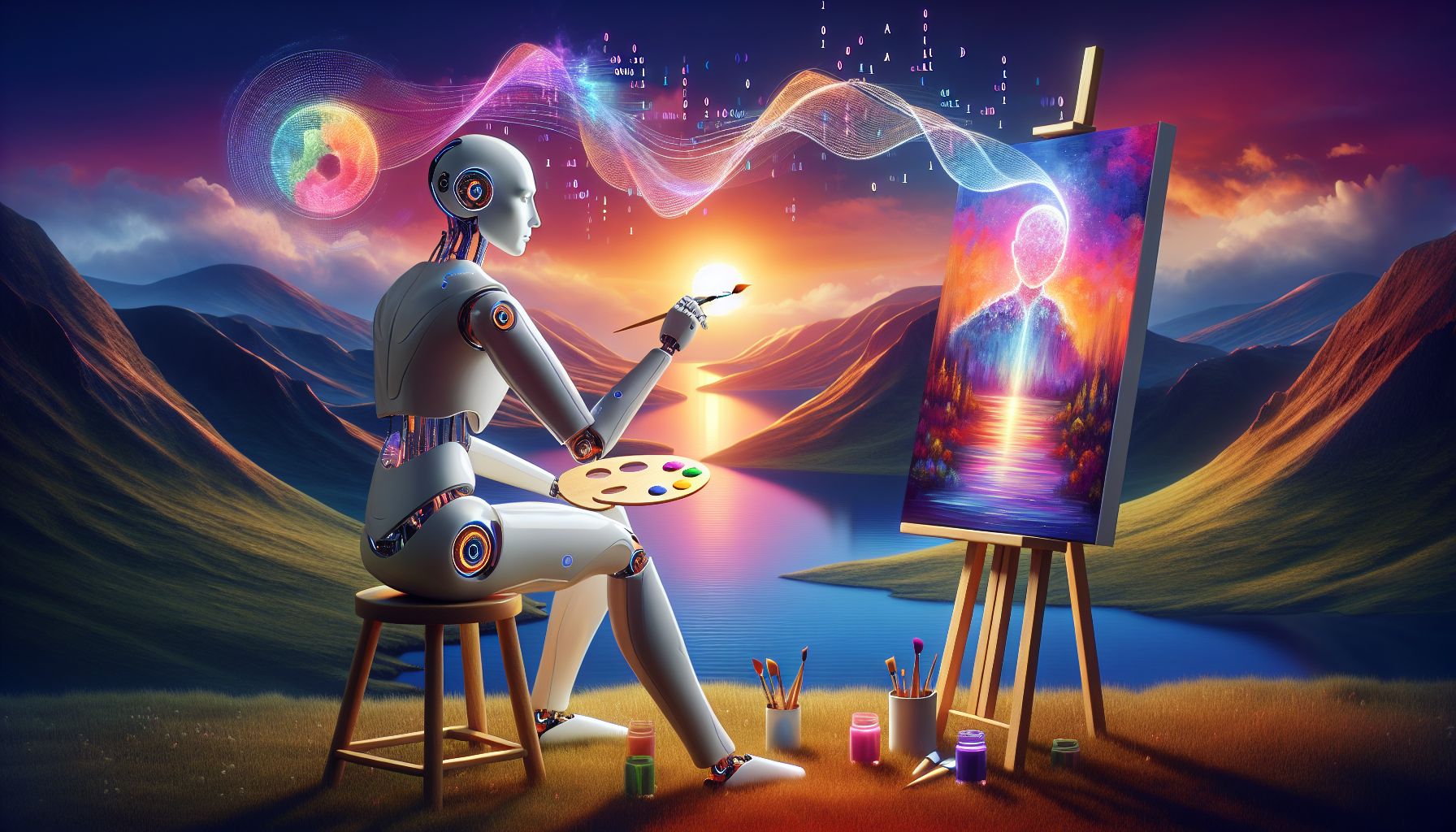
Hey, tech enthusiasts! Today we’re diving deep into a mind-blowing area where robots and quirkiness collide—the wondrous world of Artificial Intelligence in Creative Arts. As a lifelong art aficionado who moonlights as a coder, I’ve always believed tech and creativity were destined to hook up. Well, they finally have—and their chemistry is electric!
Wanna know how AI is gamifying the creative process and helping us rethink what art might mean in an algorithm-driven world? Well, strap in, because this rabbit hole is twisty, full of sparks, and has killer tunes.
The AI Artist: Creating, Curating, Collaborating
Let’s start with how AI is changing traditional art paradigms. What’s amazing about AI artists isn’t just their technical prowess but their artistic courage. Take DALL-E from OpenAI, which can produce incredible digital art from simple text descriptions. Whether you’re into avant-garde or need simple designs for your side hustle, DALL-E delivers exactly the flair you’re looking for.
One Saturday morning, feeling somewhat like Salvador Dalí in a digital world, I decided to test-drive OpenAI’s GPT-4 to generate a docu-drama script. The outcome? A genuine cocktail of human smarts and algorithmic muscle. However original an idea might be, having AI draft something Shakespearean for me made me both spooked and terribly excited.
This artistic revolution extends to music as well. AI platforms like AIVA allow musicians to co-compose remarkable scores. It’s like having a ride-share app for symphonies and epic jams. And honestly, it’s way easier to use before your morning coffee.
From Classical to Cutting-Edge: AI’s Style Flexibility
Not everything AI produces earns instant gallery street cred, that’s true. Curation matters just as much as creation when we talk about AI in art. But AI’s real superpower is its ability to switch styles without being tied to any artistic identity.
OpenAI’s way of crafting impressionist works one morning and mythical fantasy scenes that evening creates something between pure magic and eye-opening design exploration.
Take Discord’s drawing bot, for instance. Powered by advanced AI, it lets absolutely anyone become a mini Picasso. The spontaneity is incredible, and the creative limits basically disappear. It brings back that pure joy of imagination through ready-made meme templates and instant artistic feedback.
Practical Tool or Pure Art? The Ongoing Debate
Of course, skepticism runs deep in traditional art circles. Some worry that AI-generated art lacks the human soul that makes real art meaningful. Others question whether we’re just creating sophisticated copying machines rather than true creative partners. The debate gets heated quickly.
I get both sides, honestly. There’s something unsettling about a machine cranking out museum-quality pieces in seconds. But there’s also something thrilling about democratizing creativity, making artistic tools available to anyone with an internet connection. The line between artist and algorithm keeps getting blurrier.
What Creative Future Lies Ahead?
Here’s where things get really interesting. As someone wrestling with these imaginative futures, I think we’re heading toward true human-AI creative partnerships. Not AI replacing artists, but AI amplifying human creativity in ways we’re just starting to understand.
Picture this: artists using AI as a brainstorming partner, generating dozens of concepts in minutes, then applying human judgment, emotion, and experience to refine them into something genuinely moving. Or musicians collaborating with AI to explore sonic territories they never would have discovered alone.
The aesthetic possibilities feel endless right now. We’re witnessing the birth of entirely new art forms, and honestly, I can’t predict where this creative explosion will take us next. But I’m here for the ride.