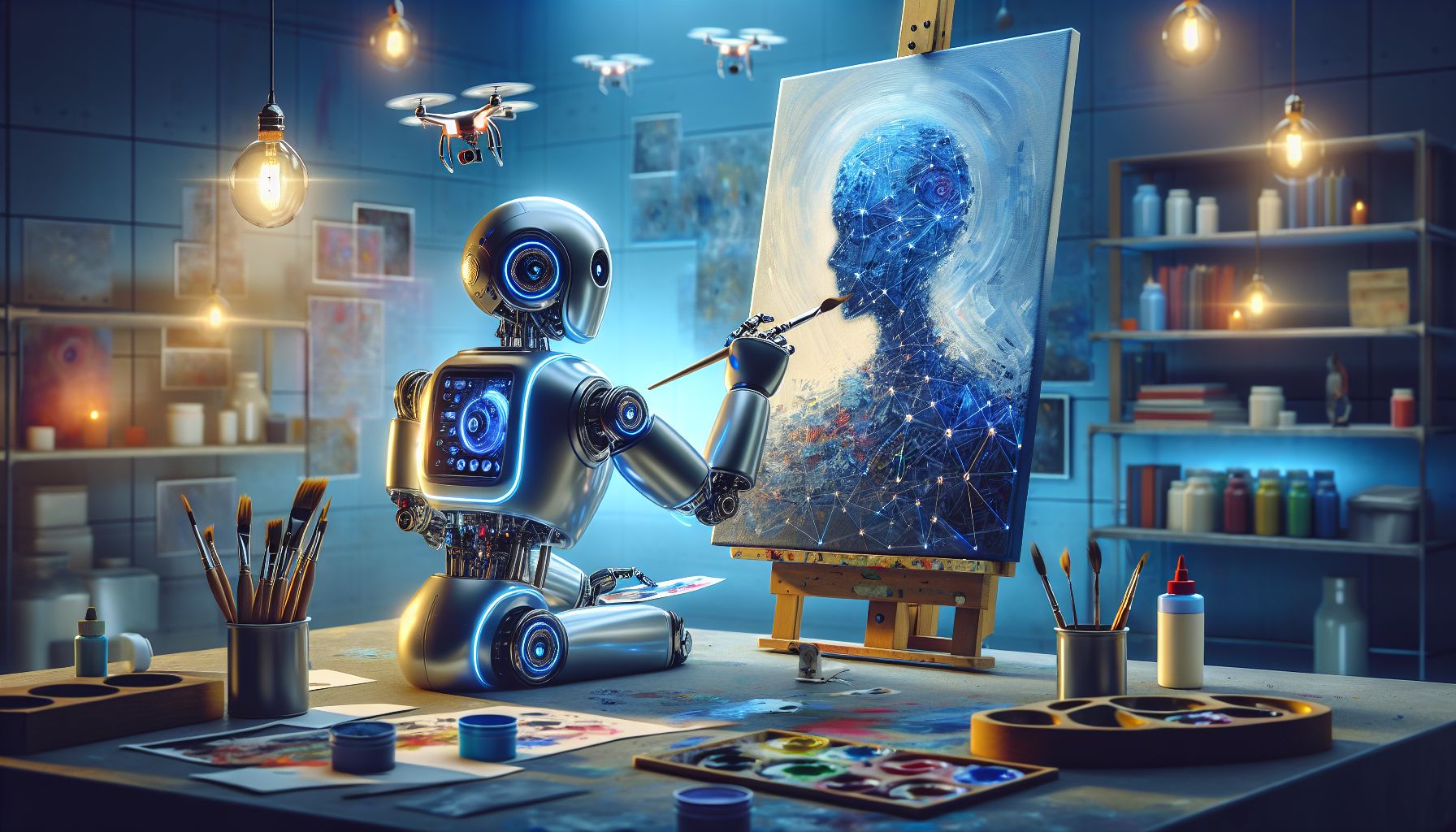
Greetings, fellow digital trailblazers! Remember the days when you’d scribble doodles on the back of a math notebook and dream of life as an artist? Fun times! Over the years, artistic aspirations have gotten a techno-upgrade, leading to incredible renditions created not by humans but by artificial intelligence. Isn’t that exciting? Today, we’re exploring the wild world of AI in creative arts, where algorithms get a fresh brush stroke every day. And by AI, I’m not just talking about robotic copy cats that echo human creativity. I’m talking full-blown Picasso-machines with processors for paintbrushes.
How AI Found Its Footing in Art
Let’s kick things off where all adventures begin: at the start. It wasn’t too long ago that an ‘AI-does-art’ storyline would be synonymous with science fiction. Age-old craftsmanship married with cutting-edge technology? Well, that seemed ages away. But here we are, and it turns out everyone is recruiting AI artists, from elegant orchestras to chaotic canvases.
AI for art initially entered the spotlight by experimenting with digital paint jobs. This practice relied on algorithms trained on databases with millions of artworks by renowned human artists. These algorithms crunched patterns like Mozart solving a musical puzzle, and voila! Robo-Da Vincis erupted everywhere, turning pixels into Picassos.
Think DeepArt.io experimenting with Renaissance masterpieces and GANs (Generative Adversarial Networks) creating dreamlike landscapes. Those tiny art-bots are sprouting original compositions that would make even critics scratch their heads. We’re living in a world where tech and tradition are knitted together tighter than your grandmother’s sweater.
Creative Dilemma: Collaborative versus Autonomous Creation
The relationship between AI and humans deserves a closer look. Are humans still conducting the orchestra, or are we watching machines compose their own symphonies? The artistic process isn’t black and white anymore. Master algorithms now collaborate with avant-garde artists who are curious about pushing creative boundaries.
When designers team up with neural networks, they challenge audiences to tell the difference between human intuition and algorithmic precision. Honestly, I’m impressed by what these silicon artists can sketch. They’re creating harmonies and aesthetics we’ve never heard or seen before. It’s like watching creativity evolve in real time.
But here’s where it gets complicated. As AI becomes more prominent in art creation, we’re left wondering about authenticity. What makes art “real”? Is it the emotional intention behind it, or can genuine creativity emerge from code? These aren’t easy questions, and I don’t think we have clear answers yet.
The Future’s Wide Open
So what does this all mean for artists and art lovers? I think we’re seeing the beginning of something remarkable. AI isn’t replacing human creativity, it’s expanding what’s possible. We’re getting art that combines human vision with computational power in ways that surprise even the creators.
Will we reach a point where AI creates masterpieces entirely on its own? Maybe. But right now, the most interesting work seems to happen when humans and machines collaborate. It’s messy, unpredictable, and sometimes produces results neither could achieve alone.
The art world has always adapted to new tools and technologies. Photography didn’t kill painting. Digital art didn’t destroy traditional media. I suspect AI will find its place alongside these other innovations, opening new doors rather than closing old ones.