The Clamshell That Saved Portable Gaming
Picture this: it’s 2003, and your original Game Boy Advance is practically unplayable unless you’re sitting directly under a lamp or squinting in perfect sunlight. Nintendo had created this incredible 32-bit handheld with a gorgeous library, but somehow forgot that people might want to actually see what they’re playing. Enter the Game Boy Advance SP, and suddenly everything clicked. That satisfying snap of the clamshell design. The front-lit screen that made Metroid: Fusion’s atmospheric corridors actually visible. The rechargeable battery that lasted forever.
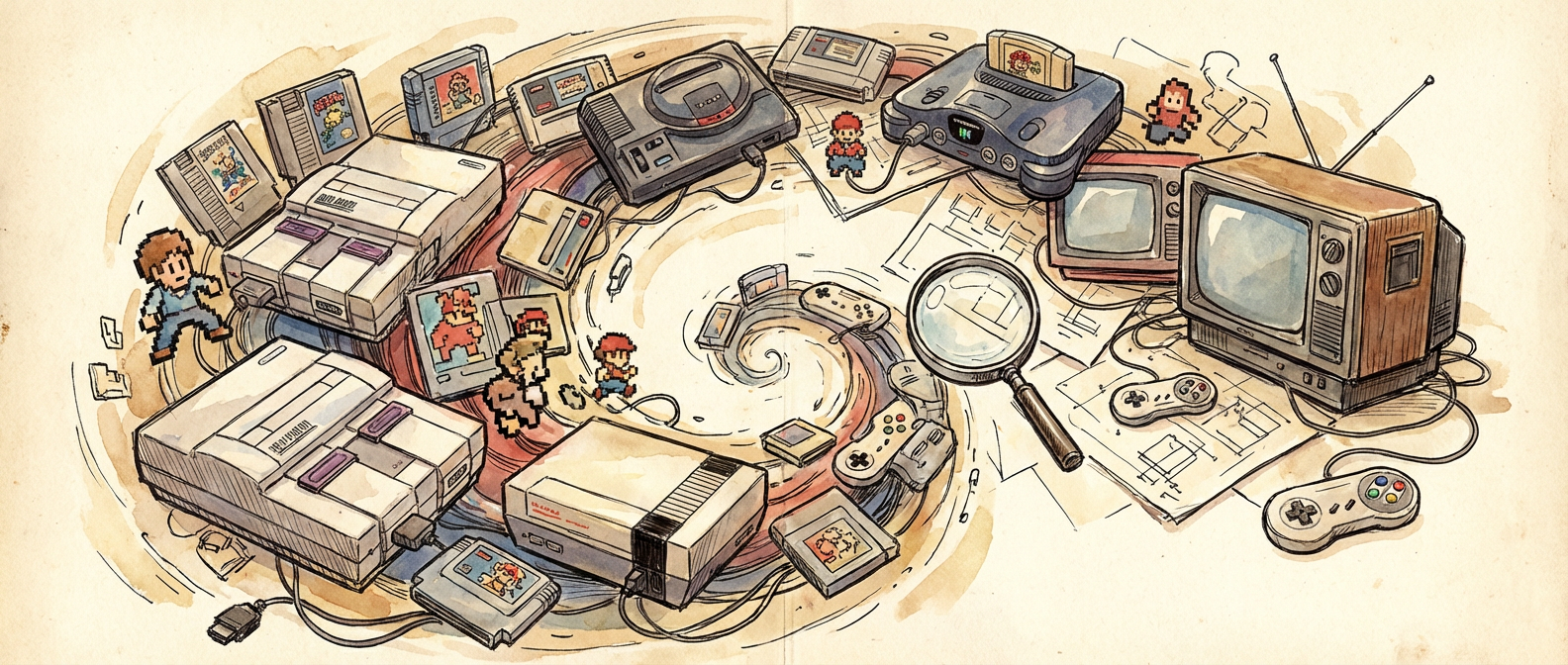
What strikes me most about revisiting the SP today is how it represented Nintendo at their absolute best: taking community feedback seriously and iterating rapidly. The original GBA had been out for barely two years when the SP launched, but Nintendo didn’t just slap a light on it and call it a day. They completely reimagined the form factor, created one of the most durable handhelds ever made, and gave us something that felt genuinely premium in an era when most electronics still felt like plastic toys.
The SP wasn’t just an improvement, it was a statement. It said that portable gaming deserved the same level of polish and consideration as home consoles. And honestly? That message hit so hard that it’s still influencing handheld design twenty years later.
The Library That Time Forgot
Here’s where I get genuinely emotional talking about the SP: the games. Not just the obvious classics like Advance Wars or Mario Kart: Super Circuit, but the deep cuts that defined what portable gaming could be. Mother 3, which we still haven’t gotten officially in English, had storytelling that rivaled anything on home consoles. Golden Sun proved that epic JRPGs could work perfectly on a small screen. WarioWare, Inc. basically invented the concept of microgames and influenced mobile gaming forever.
But let’s talk about the real heroes: the third-party developers who saw the SP’s potential and ran with it. Wayforward’s Shantae was this gorgeous, hand-animated platformer that pushed the hardware to its limits. Atlus brought us Riviera: The Promised Land, an RPG that felt like playing through an interactive storybook. These weren’t lazy ports or simplified versions of bigger games. These were experiences crafted specifically for the hardware, understanding that portability changed how people wanted to play.
The backwards compatibility with original Game Boy and Game Boy Color games meant the SP was essentially a greatest hits machine for fifteen years of portable gaming history. You could play Tetris, then switch to Advance Wars, then dive into Link’s Awakening DX. No other handheld before or since has offered that kind of historical depth right out of the box.
Community Memories and the Mod Scene
Walking through any retro gaming convention today, you’ll find at least a dozen vendors selling modded SPs, and there’s a reason for that. The community never let this system go. Even as the DS launched and the gaming world moved on, dedicated fans kept finding ways to improve and preserve these machines. The AGS-101 backlit screen mod became legendary among collectors, transforming even the earlier front-lit models into something that could compete with modern displays.
I’ve been talking with longtime community members, and the stories they share about the SP consistently come back to one thing: it was the system that made them feel like serious gamers. Sarah, a collector from Portland, told me her SP was the first gaming device her parents didn’t treat like a toy. “It looked grown-up,” she said. “I could play it on the bus to college without feeling embarrassed.” That dignity mattered. It helped establish portable gaming as something for everyone, not just kids killing time.
The modding community around the SP has also preserved gaming history in ways Nintendo never intended. Flash carts and homebrew development have kept obscure Japanese exclusives alive and accessible. Fan translations of games like Mother 3 found their perfect home on original hardware, maintaining the authentic experience while bridging language barriers that corporate localization teams couldn’t or wouldn’t cross.
Design Lessons We’re Still Learning
Every time I pick up a modern handheld, whether it’s a Steam Deck or a Nintendo Switch Lite, I see echoes of the SP’s design philosophy. The focus on build quality over flashy features. The understanding that portability means the screen needs to be protected. The idea that battery life should be measured in multiple gaming sessions, not minutes.
But there’s something the SP got right that modern systems are still struggling with: it knew exactly what it was. It wasn’t trying to be a phone or a media player or a productivity device. It was a game machine, designed by people who understood games and built by a company that still remembered why fun mattered. The button feel, the weight distribution, the way it fit in your hands, everything was optimized for the simple joy of playing games.
The community understands this better than the industry sometimes does. Watch someone fire up their SP at a gaming meetup and notice how it draws people in. There’s no setup time, no software updates, no account login screens. Just flip it open and play. In our current era of complex gaming ecosystems and always-online requirements, that immediacy feels almost revolutionary.
I’d love to hear your own SP memories and discoveries. Whether you’re still rocking an original model or hunting for that perfect AGS-101, there’s always more to uncover in this incredible library. What games are you playing? What mods have caught your attention? And seriously, if you haven’t experienced the original Advance Wars on actual hardware, we need to talk about why that’s essential gaming history you’re missing. Drop your thoughts in the comments and let’s keep this conversation going.