The Setup That Lives in Your Memory
We’ve all been there. You’re browsing gaming forums at 2 AM, stumbling across someone’s pristine battlestation photo, and suddenly you’re transported back to 1999. You remember that magical Christmas morning when you unwrapped a Nintendo 64, how the controller felt impossibly futuristic in your hands, the way GoldenEye’s split-screen multiplayer turned your living room into the most important place on Earth. That memory becomes the blueprint for your dream setup, but here’s the thing about nostalgia: it’s a beautiful liar.
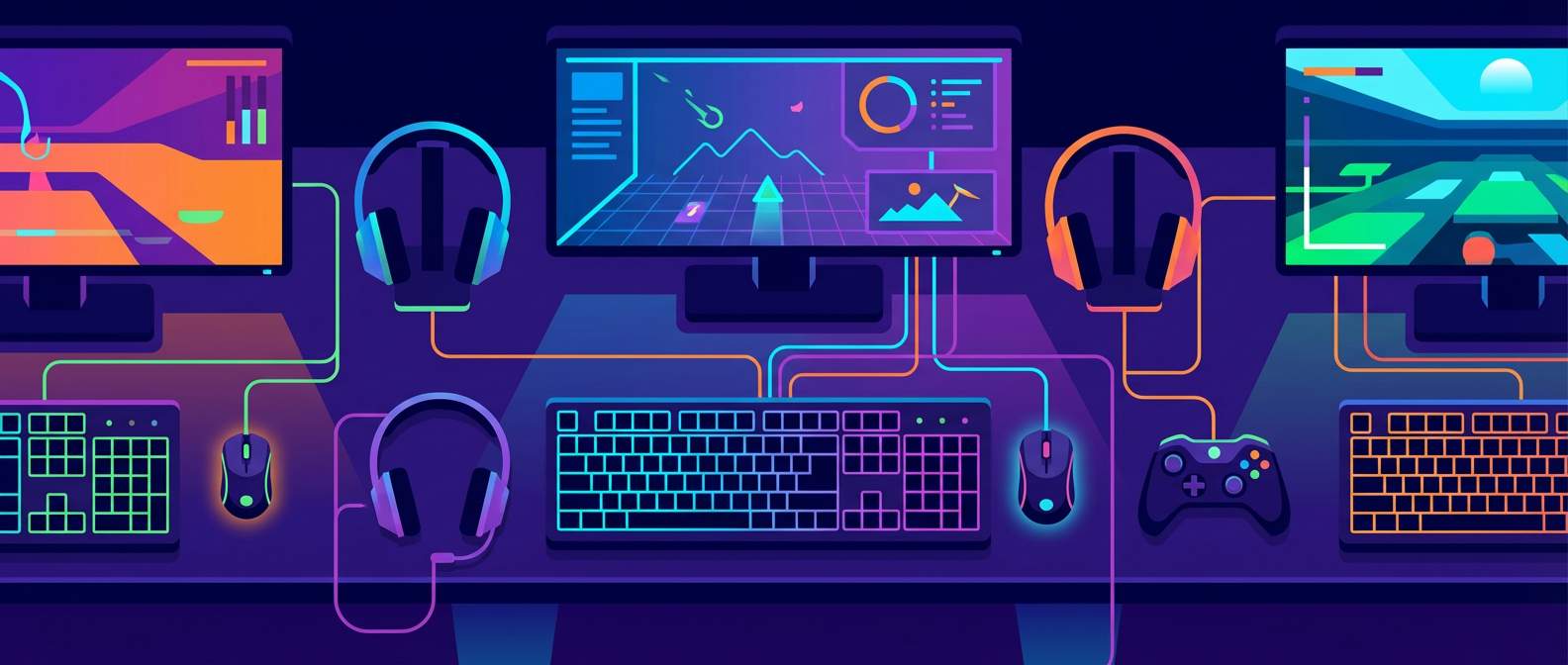
Building a gaming peripheral setup based purely on fond memories is like trying to recreate your grandmother’s cookies using only the emotion of Sunday afternoons. The N64 controller? Revolutionary in its time, sure, but let’s be real here. That three-pronged design was ergonomically weird by today’s standards. Those CRT monitors we remember so fondly were heavy, took up half your desk, and threw off enough heat to warm a small apartment. Look, our memories aren’t wrong, they’re just incomplete stories edited by time and filtered through the golden glow of being twelve with unlimited summer vacation ahead.
Here’s the thing about building a setup that honors your gaming history while actually working for your current needs: you need to understand the difference between nostalgia and functionality. Your memories matter and they’re valuable, but they can’t be your only guide when choosing peripherals you’ll use for hours every day. Trust me on this one.

The Controller Conversation Nobody Wants to Have
Let’s start with the most personal piece of your setup: the controller. Every gamer has that one controller that feels like an extension of their soul. Maybe it’s the original PlayStation DualShock that introduced you to analog sticks, or the GameCube controller that somehow made Super Smash Bros. Melee feel like playing a musical instrument. The problem? Muscle memory can be a stubborn roommate who refuses to accept that maybe, just maybe, there might be something better out there.
Take the beloved GameCube controller. It’s genuinely excellent for specific games, particularly anything from Nintendo’s catalog from that era. That massive A button tells a story about priority and importance, basically screaming “this is what you’ll press most often, so we made it impossible to miss.” Smart design. But try using it for a modern first-person shooter or any game that relies heavily on the right stick, and you’ll quickly understand why controller design evolved. The C-stick feels like an afterthought because, well, it was.
Modern controllers like the Xbox Series X/S controller or the DualSense have decades of ergonomic research baked into their design. They’ve learned from every misstep, every cramped hand session, every “why did they put that button there” moment. The DualSense’s haptic feedback isn’t just a fancy marketing feature. It’s actual tactile storytelling that would have seemed like science fiction to our younger selves. But admitting this can feel like betraying a dear friend.
The solution isn’t choosing between nostalgia and progress. Build your setup around what you actually play most often, then keep your nostalgic favorites for specific occasions. That GameCube controller absolutely deserves a place in your setup if you’re serious about Melee. But don’t force it to be your daily driver for everything just because it holds emotional weight.
Audio Equipment and the Myth of “Good Enough”
Here’s where nostalgia really plays tricks on us. We remember gaming audio being amazing back in the day, but we’re often remembering the context more than the actual sound quality. Those built-in TV speakers or basic computer speakers weren’t delivering audiophile experiences. They were just the best we knew at the time. The emotional impact of hearing Samus’s footsteps in Super Metroid for the first time wasn’t about frequency response or soundstage width. It was about discovery, about being immersed in something completely new.
Today’s audio options would have seemed impossibly luxurious to our past selves. A decent pair of studio monitor headphones will reveal layers in your favorite game soundtracks that you never knew existed. Suddenly you’re hearing the subtle reverb in Hollow Knight’s caverns or catching background instrumental details in Persona 5’s jazz-influenced score that completely change how you experience these worlds.
But here’s the honest truth: upgrading your audio setup can also ruin some nostalgic gaming experiences. Play an original Game Boy game through high-quality headphones and you’ll hear every harsh, compressed note in stark detail. Those bleeps and bloops that sounded perfectly charming through tiny speakers can become grating when reproduced with clinical accuracy. It’s like watching a beloved childhood movie in 4K and noticing the visible wires holding up the spaceship models. Sometimes ignorance really was bliss.
The sweet spot is understanding what each piece of audio equipment brings to different types of gaming. Keep those nostalgic setups for retro gaming sessions, but don’t let them hold back your experience with modern titles that were designed with contemporary audio capabilities in mind.
Display Technology and the Great CRT Debate
No discussion of nostalgic gaming setups is complete without addressing the elephant in the room: CRT monitors and televisions. The retro gaming community has developed an almost religious devotion to these bulky, power-hungry relics, and honestly? They have some valid points. CRT displays have zero input lag, perfect black levels, and that distinctive scan-line aesthetic that many classic games were literally designed around.
Playing Street Fighter III: Third Strike on an original CRT arcade monitor is genuinely different from playing it on a modern LCD. The response time difference is measurable and meaningful for competitive play. Light gun games like Time Crisis or House of the Dead simply don’t work on modern displays without additional hardware. For these specific use cases, CRT technology isn’t just nostalgic preference. It’s functional necessity.
However, let’s be brutally honest about daily usability. CRT monitors are heavy enough to double as home security devices. They eat up enormous amounts of desk space, generate serious heat, and many are reaching ages where component failure is becoming common. Finding replacement parts is increasingly difficult, and repair expertise is becoming a niche skill. That perfect gaming experience comes with very real practical costs that I’m not sure I’m willing to pay anymore.
Modern gaming monitors have their own advantages that we sometimes forget to appreciate. Higher refresh rates, better color accuracy, multiple input options, and energy efficiency that won’t require a separate electrical circuit. A good modern display with proper settings and maybe some shader effects can get surprisingly close to the CRT experience for most games while offering conveniences that our past selves would have considered miraculous.
Building a Setup That Works for Both Past and Present
The most honest approach to building your dream gaming setup is creating zones rather than compromises. Dedicate space for your nostalgic preferences while ensuring your primary gaming area works for your actual habits. Maybe that means having a small CRT setup for retro consoles in one corner while your main desk focuses on modern functionality. Perhaps it’s keeping your beloved GameCube controller for specific games while using a more versatile modern controller as your daily driver.
Remember that your gaming history is part of what makes you who you are as a player. But it shouldn’t become a prison that prevents you from enjoying new experiences. That 15-year-old discovering GoldenEye for the first time was working with the best technology available to them. Honor that spirit of embracing the best tools for the job rather than clinging to specific hardware because of when you first encountered it. I think younger you would actually approve of that approach.
What’s your gaming setup story? Are you team CRT or have you fully embraced modern displays? Drop a comment about your peripheral journey, whether you’re still rocking that ancient controller that somehow still works perfectly or you’ve gone full modern with all the RGB lighting. I’d love to hear how you balance nostalgia with functionality in your own gaming space.