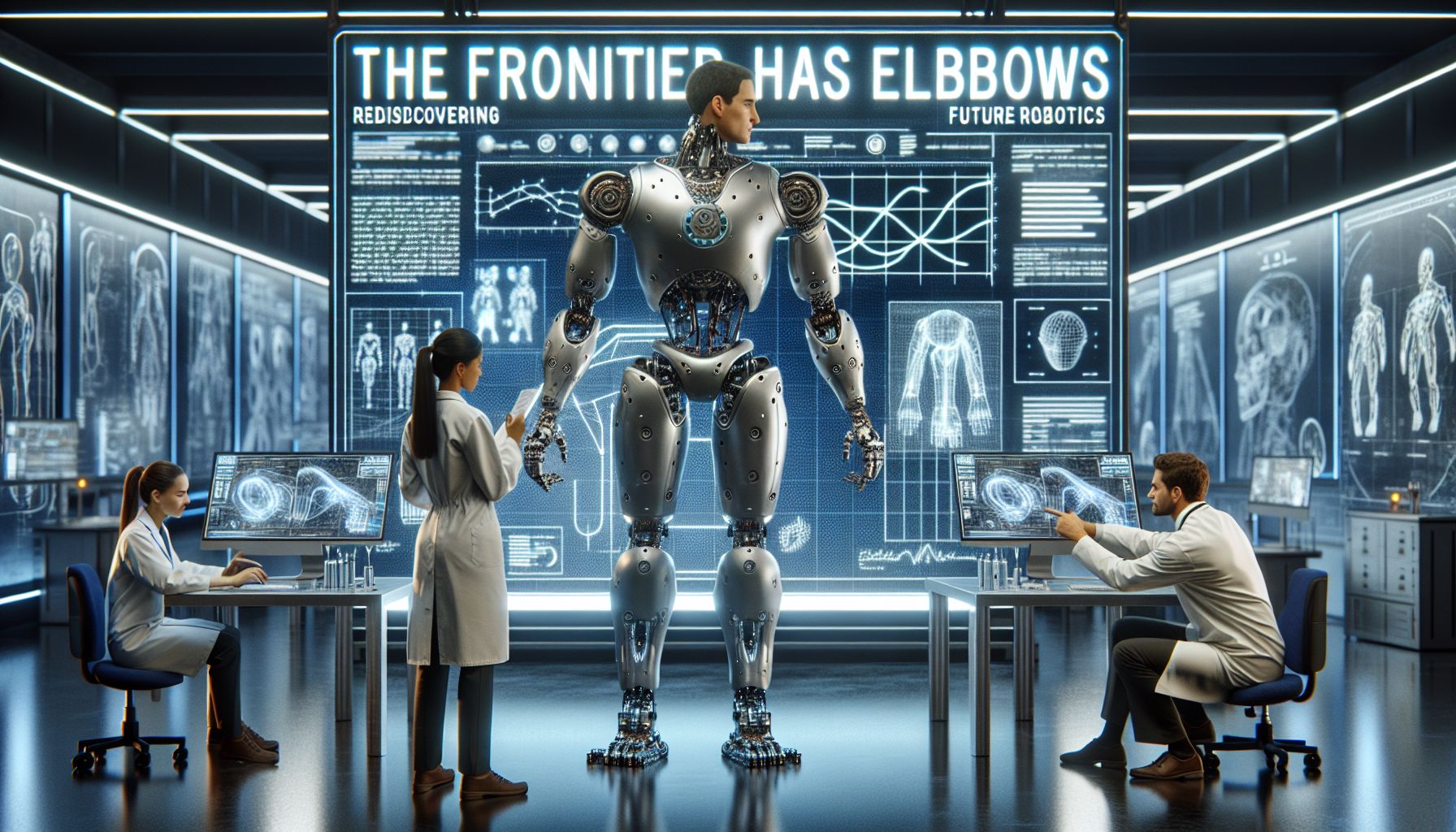
I love mornings that kick off with a steaming cup of coffee and “Wait, robots can do that now?” racing across my social media feed. Down the rabbit hole I go, pulled in by the latest robotics breakthroughs. Today I want to share something that caught my eye: robots are getting eerily smooth, fluid motion in their arms and joints. We’re talking about robot elbows that actually move like, well, elbows.
Getting an Arm Up in Robotics
Forget the jerky, mechanical movements of old sci-fi movies. Today’s robots move with an almost unsettling grace. We’ve got soft materials mimicking muscle and joint movement, creating motion that would make a dancer jealous. It’s wild to watch a robot arm flow through complex movements with the kind of precision that used to be purely human territory.
The breakthrough comes down to fluid mechanics and smart engineering. These robotic limbs aren’t just handling industrial tasks anymore. They’re creating art, performing delicate surgeries, even learning to paint. Companies like Boston Dynamics keep pushing boundaries, and honestly, sometimes I’m not sure if I’m watching a robot or a very talented performer.
Robot Dance Parties Are Actually Happening
You’ve probably seen those YouTube videos of robots busting moves on talent shows. What started as a novelty act has become something much more sophisticated. These aren’t just programmed routines anymore. We’re looking at robots that can adapt their movement in real time, responding to music and environment.
The practical applications are staggering. Physical therapy robots that can demonstrate proper movement. Manufacturing bots that can handle delicate assembly work. Even household robots that won’t knock over your grandmother when they’re helping her up from a chair.
But here’s what really gets me: watching a robot move with such fluid grace forces you to rethink what makes movement “human.” When a machine can replicate the subtle shift of weight, the gentle arc of an arm reaching for something, it’s both fascinating and a little unnerving.
The Technical Magic Behind the Movement
The engineering here is genuinely impressive. Engineers are using soft robotics, mimicking biological systems with flexible materials and sophisticated control algorithms. Instead of rigid joints clicking into predetermined positions, these arms flow through space like they’re swimming through air.
Sensors provide constant feedback, adjusting movement thousands of times per second. Machine learning algorithms study human movement patterns and adapt. The result? Robots that don’t just complete tasks but do so with an elegance that would have seemed impossible just a few years ago.
I’ll admit, part of me finds this exciting and part of me finds it deeply weird. When you watch a robot arm pour coffee with the same gentle confidence as a skilled barista, it’s hard not to wonder what we’re building toward.
Where This All Leads
The implications go far beyond cool YouTube videos. We’re talking about robots that can work alongside humans safely, handling tasks that require both strength and finesse. Eldercare robots that can assist without feeling cold and mechanical. Creative collaborators that bring a new dimension to art and performance.
Sure, there are still limitations. These systems are complex and expensive. They require massive amounts of processing power and careful calibration. And honestly, there’s still something uncanny about watching a machine move with such human-like fluidity.
But the progress is undeniable. Each breakthrough in fluid robotic movement brings us closer to a world where robots aren’t just tools but partners in complex tasks. Whether that excites or concerns you probably depends on your perspective, but either way, it’s happening faster than most of us expected.